
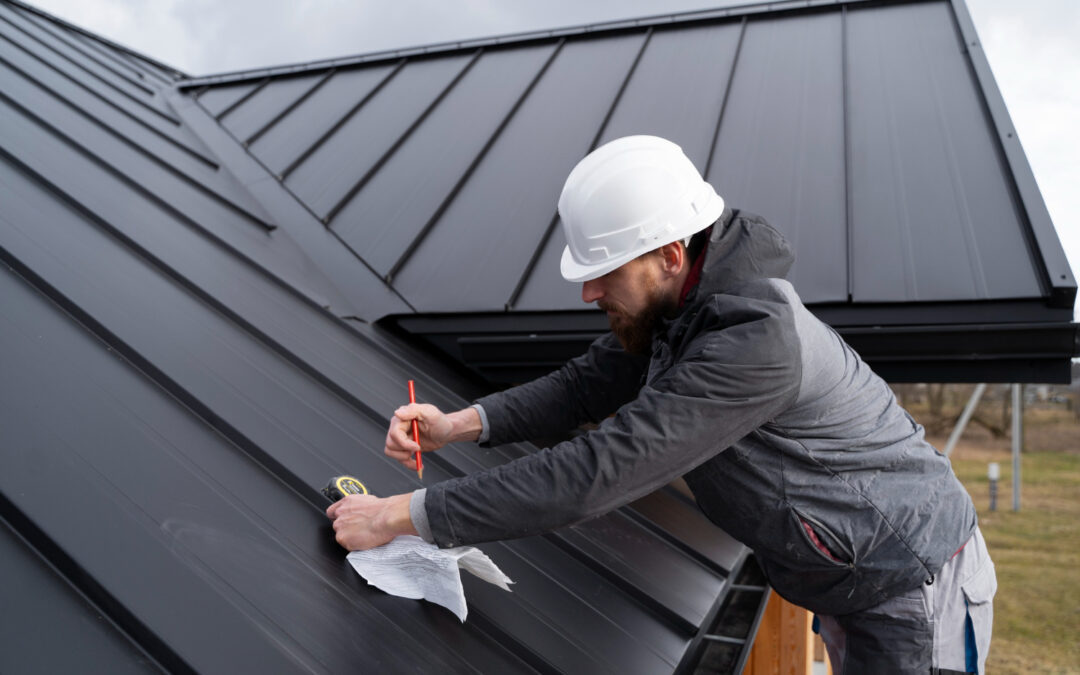
Regional roofing trades account for a significant share of construction activity across the UK. These local businesses are principally engaged in the replacement, repair, and maintenance of pitched and flat roofs, as well as in associated work on gutters, rooflights, and the like. Reflecting the regional nature of demand, most roofing contractors operate within relatively small geographic areas. A focus on Kettering – a town located in the East Midlands – can illustrate how local conditions influence practice and contribute to the provision of a skilled workforce.
A major centre for the construction industry, Kettering sits at the intersection of the A14 dual carriageway, which runs east–west linking the M1 and M6 motorways, and the A6 trunk road, which connects the East Midlands with London. The local economy now centres on the wholesale and retail trade, transport, and storage, with logistics and distribution becoming increasingly important. The town is surrounded by agricultural land, the workforce in which is supplemented by migrant workers. Local estimates indicate that around 25% of the population are employed in Kettering itself, while 70% work within a commuting distance of less than 30 minutes. Within the construction labour market, roofing contractors serve both Kettering and its neighbouring towns, where the housing stock has similar building styles and ages. Kettering’s local economy and housing stock shape the demand for roofing work, while more distant commuting reduces travel times to other important construction hubs.
2. Geographic and Economic Context: Kettering and its Surroundings
A variety of factors shape local markets for construction and home improvement, including the specific requirements of nearby customers, the specialization of regional suppliers, and the skills available in the local labor pool. Kettering roofers focus on residential and small-scale work; demand in these areas is closely related to the temperate climate of southern England, with a summer peak for re-roofing and a trough for routine maintenance. The town's proximity to London means that even modest homes in its vicinity are likely to be the most important long-term investment for their owners. Consequently, roofing plays a role in property enhancement and energy performance improvement, with roofing upgrades ranked third by UK homeowners seeking to add value before selling. Much of this work targets building longevity rather than energy efficiency, although both concerns are increasingly intertwined.
Multiple historic and contemporary elements converge to create the distinctive character and demands of the Kettering roofing trade. Traditionally, a wide range of roofing styles was found across the area, supported by availability of locally sourced materials. Well-stocked timber yards furnished the trusses, and masters of the various specialist trades kept lead and other skilled labor elements in regular supply. These practices remain visible in the region's historic buildings. Weather-worn slate roofs are characteristic of the older properties, while properties built during the Midlands 19th-century boom were often clad with deluxe pitch-pine shingle roofs or with affordably local clay tiles, only the former now requiring replacement. Work on the roofs of such heritage properties demands careful preparation and a distinctive skill set, as emphasized by its frequent inclusion in public-sector contracts.
2.1. Historical Development of Roofing in the Region
The style and material choices used in roof coverings reflected the predominant construction materials for the walls during the historical development of the local area. In earlier times, slates or tiles were often liable to crack or displace in times of strong winds. The supporting timberframe construction for some public buildings with large open interiors allowed for a roof covering of EPS, with the risk that snow or storm damage could lead to localised failure. Older flat roof areas on housing are now mostly covered with asphalt or polyester-based membranes, or with waterproofing to a green roof.
There is still demand for natural slate for repairs or re-roofing of properties in the older traditional urban built stock and for prestigious homes, yet the price makes it a poor choice for financial investors in the housing market. The Seasonal Climat achievable in the area also allows for asphalt and felt to be properly laid when the local trade have a flat roof crew fitting a new roof, so they remain popular. Rubber is often preferred to other options as the detail work is much simpler, and a replacement option at an affordable price for a flat roof covering is becoming available.
2.2. Local Housing Stock and Roofing Needs
Kettering roofers mostly work on traditional two- or three-bedroom private-sector homes and on local authority or housing association properties. Roofs tend to be sloped and largely covered in clay or concrete tiles, or slates, although some flat roofs are also present. The housing stock is aging, and many roofs are approaching, or past, the end of their service life. Storm damage is associated with winter, while spring and summer see the highest level of general maintenance. The demand cycle is thus influenced both by age-related re-roofing and by the need for ad-hoc responses to damage.
The housing stock surrounding Kettering developed through the 19th and early 20th centuries, supporting a local environment for Kettering roofers involved in repairs, dust and major orders for property improvements and replacements. Most of Middleton's properties continue to be privately owned and are set in reasonably-sized town gardens. Many roof materials have been retained, although the area has seen an increase in the use of slate and, to some extent, Welsh slate. Quite a number of buildings, especially larger houses, still have roofs with distinct clay tile features. Examples include the decorative use of arched clay tiles, the gable-ends tiled to the top with decorative terracotta work, turrets topped by attractive hipped roofs in glazed Malay tiles, and large Italianate houses with lower, flatter clay-tiled roofs.
3. Core Responsibilities of Kettering Roofers
Primary roofing service areas in the Kettering region typically include (a) residential re-roofing, repairs, and inspections, (b) commercial and public sector projects that involve a roof, and (c) repair, maintenance, and emergency works on any property type. Seasonal scheduling is dictated by the roof-covering operation: April to September is the main period for re-roofing, with dry days needed for laying new slates or tiles; building—particularly roadworks involving scaffolding—frequently call for flat roofing in these same months; and emergency work is year-round. Clients expect quality workmanship using durable materials, responsive service, and compliance with industry standards.
Kettering roofers have a prominent role in re-roofing houses and bungalows, repairing their roofs and lead flashings, inspecting the condition of the roofing cover, and providing recommendations for remedial or preventive maintenance. These services can cover the full spectrum of pitched-roof materials—slate, tile, asbestos cement, and, less usually, asphalt—and also inspect roof covering on domed or curved roofs of slate or tile. Other pitched roof types are much less common, but these are returning to the product range as prejudice against cottles in country areas recedes. Public and commercial works commonly cover large non-flat roofs and have their own procurement and supervision procedures, although roofing operations within full contracts undertaken by main contractors remain by far the predominant method.
3.1. Residential Roofing Services
Common residential roofing services among Kettering roofers include complete re-roofing, extensive repairs, condition inspections, gutter clearance, drainage checks, and associated maintenance tasks.
Even though domestic buildings make up a large share of roofing projects, the English summer can be surprisingly busy for Kettering roofers due to the roof replacement needs of older homes. A significant number of local properties were built in the early- to mid-twentieth century with concrete tiles that are now at the end of their useful lives and need to be swapped out for better products such as natural clay tiles or Welsh slates. Success depends on materials, pricing, craftsmanship, site cleanliness, and customer service; these are priorities in the roofing supply chain.
3.2. Commercial and Public Sector Projects
Public and commercial projects in the Kettering area typically involve some form of tendering, whether competitive or through negotiated contracts, and a formal procurement process by the local authority or a housing association. Roofers take part as principal contractors or as subcontractors, for larger firms bringing together a mix of trades. Plumbing, electrical work, and finishes such as plastering and tiling are often required. Where project costs were once financed wholly by local councils, cash-strapped authorities now influence many school building decisions through capital grants and by devolution of budget responsibility to the foundation schools that lease facilities from them.
Even on projects for clients with stringent procurement procedures, established working relationships and local knowledge remain vital. Good maintenance of public housing can be important for the long-term health of the construction supply chain, minimising expensive emergency repairs while laying the groundwork for sustainable demand for roofing work. Kettering contains areas of social housing supported by the borough council or by Northamptonshire and other housing associations.
3.3. Repair, Maintenance, and Emergency Works
Responsive repair, maintenance, and emergency services support Kettering's roofing trade. Seasonal weather patterns and the need for reassurance encourage rapid response to storm damage; warranties from reconstruction are vital; and customers expect maintenance guidance to avoid future concerns.
Weather resilience plays a pivotal role in emergency work and planning. Wind-damaged slates or tiles, often dislodged in groups by high gusts, typically require a quick fix or full re-roofing ahead of winter. Relying on quality materials and tradespeople is crucial; care and preparation largely prevent failure during the UK’s harsher months.
4. Common Roofing Materials and Techniques
Built-up roofs on commercial and public buildings predominantly employ various flat-roofing systems. Local practice emphasizes internal drainage and waterproofing adapted to the risk of standing water; these considerations also drive choice in the external finish for flat-roofed outbuildings. Insufficient seasonal demand for full green roofing systems limits uptake of this popular sustainability solution, though reflective coatings and lightweight living roofs that integrate sedum cover regularly appear on residential projects.
Durability, aesthetics, and compatibility with existing stock determine selection among the locally favoured slating, tiling, and asphalt-shingling solutions for pitched roofs. While repairs are often possible after winter damage, re-roofing remains an important service area—especially in locations where existing roofs lack appropriate insulation. Strong winds, heavy rain, and local frost patterns inform material choice, technique selection, and delivery processes; an ever-present focus on safety underpins every aspect of roofing work.
4.1. Slates, Tiles, and Asphalt Shingles
The roofing landscape around Kettering reflects the UK market more generally, with a variety of types and materials in use. Kettering roofers repair and replace pitched roofs clad in slate or tile, alongside flat roofs covered in built-up systems or single-ply membranes. Each kind of roofing surface hosts its own considerations for owners and the roofing trade. Slates and tiles can last for decades, but they remain vulnerable to frost action and wind displacement—problems that will occur long before the end of any product warranty. Flat roofs, meanwhile, are more reliable in summer but risk faster failure during autumn rain and winter freeze. Local demand therefore peaks during the summer months, but roofing trades are proportionately more active in spring and autumn as homeowners turn to regular inspections, re-roofing entire surfaces, and managing the consequences of winter weather.
Kettering roofers chiefly work with natural slate, ceramic tile, or asphalt shingle on pitched roofs; flat surfaces are capped with built-up felt systems or single-ply membranes; and ventilation, insulation, or weatherproofing upgrades follow on at the owner’s request. Natural slate, clay tile, and concrete tile each offer up to half a century of service, with natural slate and clay tile outperforming concrete in terms of aesthetics and stability of appearance. Widespread use in Kettering ensures local stocks of second-hand tiles that allow for sympathetic repairs, while careful colour-matching safeguards overall appearance during re-roofing. Asphalt shingle is less common, but its lightweight construction suits older houses with lower load-bearing capacity. Asphalt shingle is usually replaced after one or two decades, and samples often feature within consultants’ and banks’ building appraisals.
4.2. Flat Roof Systems and Waterproofing
Although most roofing in and around Kettering is pitched rather than flat, substantial areas are covered by flat roofs. These are found on many types of buildings, including homes, commercial properties, and public-sector assets.
Construction methods for flat roofs vary considerably. Most predominantly use membrane systems based on single-ply, built-up, or liquid-applied membranes. These are complemented by waterproofed timber decks; capping or edge treatments in angled tile, sheet metal, or precast concrete; and properly-designed falls to facilitate drainage. Common points of failure include scraped or punctured membranes and drainage capacity over the UK’s wettest months. Renewal comprises replacement of the underlying support plus new waterproofing.
4.3. Sustainable and Energy-Efficient Roofing Options
Homeowners and organizations seeking a sustainable roof with low energy consumption in operation have a variety of options. These include thermal insulation applied to the roof structure that reduces the overall heat transfer coefficient, which may reduce the need for active heating or cooling; roof-covering materials that reflect a large proportion of the sunlight hitting the surface; and lightweight green roofs that help manage drainage and biodiversity.
Thermal insulation may be added to the underside of existing slates or tiles, provided that the structure is capable of supporting the additional load. Modern foil-faced insulation adds very little thickness yet can achieve high performance. Some green roofs do not require a waterproof membrane because the soil is constructed to remain saturated, but ventilation is crucial. Traditional balanced ventilation with intake at ground level works best, as this allows the saturated air to escape where it is least likely to condense. Rainscreen systems also serve this function.
5. Standards, Regulation, and Safety
The practice of roofing in the United Kingdom is shaped by a complex set of rules governing building control, safety, and environmental performance. Roofing activity in Kettering is subject to the same framework, and local trades are actively engaged in ensuring the underlying premises are observed during work in progress. Compliance is secured through a combination of historical accident, local knowledge, and—because life is a continuous education—through absorption of the periodic updates provided by regular training sessions run by the Health and Safety Executive and other bodies for approved. The emphasis on safety reflects that, at least among the professionals, roofing is now regarded as one of the most hazardous trades in construction. It hasn't always been so. The earliest practitioner of roofing awoke and worked on roofs in conditions that, by modern standards, would have been considered unacceptably risky. No-one then made waves about it. If a practicioner did fall from heights and survive it was merely natural selection purging bad parenting, while every fall stayed within the safety margin set by the strength of roofing materials.
Whether the reduced tolerance for risk among heathens who snooze unsecured at twenty-five metres or thirty-five feet was earned eludes concession, but the fact remains that safety in roofing has entered into much closer scrutiny. Its rigourful control does not absolve practitioners from responsibility: ultimately it is still the responsibility of every contractor to take and maintain all necessary precautions rendered sensible by the site and weather conditions at the time. In practice, those precautions fall into three distinct classes: health and safety measures pursued during the contract's life; precaution against harm to other people; precaution against risk to other property.
5.1. Building Regulations and Planning Considerations
Relevant UK building regulations apply to the roofing sector, and certain projects in Kettering and the surrounding area require planning permission or additional approval from the local council or other planning authorities. Most roofing work does not require a formal application, but any alterations that affect the overall shape or structural integrity of the roof may be subject to controls and permissions set out in the National Planning Policy Framework, Planning Practice Guidance, and the associated Development Plan Local Framework for North Northamptonshire. Guidance for homeowners is available on the Kettering Council website.
Kettering roofers must maintain a comprehensive awareness of the health and safety regulations governing their work. Roofing continues to be one of the more dangerous trades, with falls from height consistently among the primary causes of work-related fatalities. Site-specific risk assessments are essential for all jobs, and provision of personal protective equipment (PPE), appropriate training, and adherence to established site protocols are vital for protecting workers and the public alike. Scheduling is also important for safety: projects conducted outside of the winter months minimize exposure to adverse conditions, and roofing activities undertaken in combination with scaffold-altering work reduce the time spent on scaffolds.
5.2. Health and Safety for Roofing Works
A culture of health and safety pervades roofing work in the UK and harmonizes with regulatory, market, and material-specific influences on roofing activities in Kettering. It is deeply embedded in training recommendations from trade associations and investment sector bodies alike. Leading contractors recognize that roofers often work at height, sometimes off scaffolding, and should therefore have received protection training as provided through the Construction Industry Training Board (CITB) Skills and Training—One Stop Shop.
Moreover, main contractors overseeing larger projects in public, commercial, or industrial sectors invariably stipulate adherence to Construction (Design and Management) Regulations 2015. These guidelines instruct designers and clients to introduce safety measures at the outset and later require bidders and site workers to conduct appropriate risk assessments, utilize protective equipment and clothing, and develop emergency protocols and working methods bespoke to the risks entailed by the specific roofing task. Many smaller or private-sector projects, however, do not follow these procedures. Accordingly, clients arranging services directly with a roofer should verify safety competencies, clarify warranty terms, and foster a trustworthy working relationship. On especially exposed sites, long-term roof warranties mandate regular maintenance and inspection.
6. Impact on Local Construction Supply Chain
Kettering roofers form a vital link in the regional construction supply chain, interacting closely with suppliers and local trades. The broad-based skills of the roofing profession support a diverse range of projects and orchestrate a host of trades, including scaffolding, joinery, and skylighting. Given the centrality of roofing to the weatherproofing of buildings, these companies are also responsible for many urgent and safety-critical repairs, which can create "bottleneck" demand for roofing materials.
Local supply relationships and commonly stocked items enable Kettering roofers to respond quickly when adverse weather or building failures create emergencies. Established partnerships with bricklayers and building merchants help to mitigate delays in procured finishes, while the availability of specialist contractors ensures that requirements for lightning protection, security, or solar power can be satisfied. Seasoned roofers tend to rely on a small number of trusted trading partners, as the quality of cement-based materials and particularly of slates from outside the UK can vary considerably. Meanwhile, examined finished work and client satisfaction, especially for timber frame projects undertaken on behalf of Kettering Council and its housing association, helps encourage repeat business.
6.1. Interactions with Suppliers and Trades
Kettering roofers have engaged with a broad range of suppliers during different stages of trade activity. Materials for new work are often supplied directly to site by the manufacturer, with variable lead times driven by demand for roofs across the UK, costs, and material type. Local suppliers often handle repairs, providing parts and advice for the small scale work that is completed by smaller local crews. Quality checks tend to be informal; reassurance about the suppliers’ quality tends to come from local knowledge rather than formal certification or sourcing processes.
Roofing companies provide the local construction industry with the uppermost layer of the supply chain. All Kettering roofs require some degree of roof covering, and their work forms part of projects undertaken by trades such as builders, electricians, joiners, plumbers, scaffolding firms, and structural engineers. Typical connections with the supply chain include connections with domestic refurbishment contractors needing inspection of roof coverings that may conceal defects, and contractors whose work involves replacing or repairing roof coverings.
6.2. Economic Multiplier Effects in Kettering
The roofing trade in Kettering plays a defining role in the local construction supply chain and contributes to the local economy through employment, spending, and interactions with other local businesses.
Collaboration, on both the material supply and trade training sides, is vital. Local suppliers provide stock and roofers maintain the connections that ensure that trades nearby can deliver quality work on time, catering to Kettering’s long-demand pipeline. Trade suppliers are also essential to the continuing training that is vital to maintaining high safety and quality standards, helping to close any skills gaps that may emerge.
7. Home Improvement and Property Value
Upgrading a property’s roof may not be a common concern for Kettering’s homeowners, but replacing an old, worn, or defective covering can significantly enhance comfort, conserve energy, and boost resale value. Most Kettering residents would strongly prefer to have these issues addressed as part of a home improvement before physically moving elsewhere, and the natural replacement cycle creates pressure for timely, diligent contractor operations. As in every aspect of home improvement, though, the decision-making process is complicated by balancing comfort and quality against cost, as well as emerging elements of building sustainability.
Given the demands of UK housing markets, many roofers across the country are well aware of the apparent “bang for buck” of typical upgrades, especially regarding insulation improvements. As suggested in the discussion on local housing stock, other rooftop options may also merit consideration alongside main replacements. Resale price is a major driver of home ownership decision-making in British culture, and roofers’ skills influence the prospective buyers’ perception of each property listing—and, by extension, the ultimate sales price.
7.1. Rooftop Upgrades and Insulation Improvements
Upgrading or completing insulation in a home’s roof structure provides a significant return on investment. Attention to these considerations normally takes place when re-roofing or performing major repair work; KT roofers providing residential services remain aware of their influence on contract value and future energy bills, along with government incentives offering homeowners a financially attractive way to improve home comfort and reduce environmental impact.
The main factors for homeowners looking to retain maximum value are payback time and, indirectly, the perceived quality of workmanship. Estimates on changeover costs frequently range from guidance for inexpensive shingle systems to labour- and especially material-intensive half-round or slate. The quality of local job completion determines woolgreening, for example; misses in such areas, or a clear lack of compliance with associated asset protection and property search protocols, lead to both posted ratings and word of mouth severely undermining a trader’s business model—sudden market shifts in either direction can be highly damaging for a well-established trader.
7.2. Curb Appeal and Market Value Implications
Considerations of comfort, energy bills, and resale value make roof upgrades a natural part of home improvement activity—especially when public financing is available. The potential for internal upgrades of roof-space insulation makes it easy to prioritise roofing decisions that reduce winter heat loss, lessen overheating in summer months, or improve household comfort during prolonged spells of cold weather. Well-insulated roofs in the shapes of pitched, hipped, and gable-end styles deliver the biggest benefits, especially when combined with a sealing layer to block internal condensation as well as external rain. Certification in Energy Performance Scoring further guides spend and supports buyers wanting to maintain low carbon emissions.
New tiles, slates, membranes, or other cladding will restore the appearance of aged and damaged rooftops, normally the most visible part of a home. Properties listed for sale will often be selected for viewings on the basis of curb appeal, meaning that the shells' external surfaces—including their roofs and eaves—can shape buyer perception even when the colour scheme is sub-optimal.
8. Sustainability, Weather Resilience, and Future Trends
Continued adaptations of sustainable technologies, shifting weather patterns, and tightening regulations will gradually reshape the local roofing trade. Two cross-cutting themes will be resilience to the typical UK weather, especially wind, rain, and frost, and the uptake of green technology, particularly green roofing systems and solar PV or hot-water integrations.
Resilience to UK Weather Patterns: Roofing materials and systems must be suitably resilient to the prevailing UK weather, particularly high winds, heavy and persistent rain, and frost. On sloping roofs, this includes selecting appropriate tiles or slates, fasteners and installation patterns, and ensuring adequate detailing at abutments and valleys. On flat roofs, it entails careful detailing of drainage, falls, and waterproofing. Wind and rain also have an impact on durability and safety, and if not designed for, can lead to premature failure of these roofs. Ensuring ventilation for the underside of roof spaces is also key to preventing issues, particularly with older roofs with timber rafters and timber boarding underneath.
8.1. Resilience to UK Weather Patterns
Kettering roofers must adapt their work to the UK’s temperamental weather. Rain, frost, and wind can all cause damage to otherwise sound roofing, so suitable materials and detailed repairs help prevent further calls after poorly constructed sections have been repaired. Typical precautions against frost damage and water penetration have already been mentioned, and wind resistance is generally addressed by ensuring the weight of each material and the sealing of joints are well-considered.
Wind, rain, and frost damage on roofs also create opportunities for future adaptation, especially for the consumer market. These are the potential benefits of accommodating roof alterations for the sustainable features, such as extensive green roofs with enough wind resistance and stability not to create water-logging problems. Alternatively, installation of solar panels on older roofs is relatively easy within the correct weight limits.
8.2. Adoption of Green Roofing and Solar Integrations
Kettering roofing contractors are beginning to incorporate sustainable options, notably green roofs, solar electric installations, and solar thermal systems. These technologies face multiple technical challenges on existing sloped roofs. In most cases, establishing a rooftop garden requires replacing the original covering, causing significant additional expense. On pitched roofs, the light weight of a low-maintenance green roof is the main advantage. High-quality green roofs with a multifaceted plant palette cannot support wind-turbine generators, while simple, light-weight versions are only suitable for temporary installations.
Rapid developments in building-integrated photovoltaics (BIPV) may soon ease compatibility problems, as these products can now be integrated seamlessly into the roof covering. New types of highly reflective waterproofing membranes, suitable for long-term exposure, are widening the range of viable applications for flat roofing. Materials based on reflective PVC or TPO reduce cooling needs, while lightweight green roofs provide insulation against heat and glare.
9. Case Studies: Notable Projects in Kettering
Illustrating roofing work in Kettering demonstrates the trade's core responsibilities and the impact of regional context on decisions, challenges, and outcomes. Several representative projects highlight trends relevant to local home improvement, roofing material selection, and work on heritage and listed buildings.
**9.1. Residential Roofing Transformations** A new roof can dramatically change a Kettering home's appearance. Replacing a flat roof with a pitched-asphalt system transformed the look and provided the owners with much greater confidence in dealing with winter weather. Inspecting the interior at the time of installation revealed severe water damage around the chimney and in adjoining bedrooms. Had the roof failed during winter, the damage would have been catastrophic.
Even an asphalt-shingle overlay on an existing slate roof can be visually noteworthy. A case study explored why one homeowner preferred this cheaper option over a like-for-like roof replacement at greater cost with no visible reward. The front aspect facing the main road was due for an inspection by the council, followed by property marketing. In light of these factors, the homeowner chose cheaper shingles for the non-visible areas and an upgraded membrane beneath to allow subsequent reuse of the existing slates on the visible aspects during re-roofing.
The impact of improper use of slate also merits mention. Switching to concrete roof tiles during the 1960s and 1970s was perceived as a sensible improvement, with no visual detraction or significant disadvantage. With many of these roofs well beyond their design life, it is now common to see flaking and deteriorating tiles. During the summer of 2022, concerns mounted as images circulated showing mass tile loss even on supposedly well-constructed roofs. Such roofs now deserve their relatively cheap re-roofing costs because the market still has significant sympathy for the contractors restoring the more attractive slates above them on the major routes through Kettering and E Northamptonshire.
**9.2. Heritage and Listed Building Roof Work** Tasks on pre-1930s homes in predominantly non-traditional styles typically involve ongoing maintenance or renovations. However, Kettering does host a handful of traditional properties that have survived. Requirement for works on these - and similar buildings elsewhere in the country - has resulted in the ongoing lag in tradespeople qualifying in England and Wales to undertake work with stone slates. The previous shortage of specialists in this traditional craft caused pressure to abandon souls through the transfer of repair work to less appropriate replacements. Indeed, the councils so keen to destroy the original fabric even imposed a narrow definition for stone-slated roofs in their conservation area.
For such heritage properties, specialist skills and material approval provide a sound basis for selection to undertake roof work. Greater scrutiny applies to the chosen approach during the planning process, ensuring that all design elements harmonise with the original structures. Indeed, this approval should cover both the proposal and the manufacturer's specification.
9.1. Residential Roofing Transformations
Major Kettering rooftops serve as the reliable landscape backdrop characterised by reasonably aged and well-cared-for, often brick and tile dwellings. The broad sweep of the older housing stock—especially the vernacular red-orange structures—lends the town a depth of character that is widely noticed.
As time passes, conditions allow roofs to age; yet repairs are made; or, a new roof is required, or a new roof installed with particular concern and planning to meet insulation, ventilation, appearance, and longevity considerations. Lead flashings to chimneys or abuttals may sustain few years less than the roof itself, or maybe up to a quarter of the acutal roof life; and for the Kettering Roofer such work is undertaken just as seriously as a complete reroofing, yet fit to follow the seasons. Indeed winter may halt some repairs and mainly scaling, scraping, cleaning—and regard to moisture—in favour of other works.
In turn, roofs do not stand alone; groups of roofs on a single property, the properties of a neighbourhood, or buildings in close proximity care influenced by their neighbours. The relationship may be ease, or sense of sight, or indeed the value any proposed new roof might add to property yet with the close inspection pre-offer or pre-purchase. Care to a roof's longevity that follows all aspects thus becomes increasingly evident in quality of materials, ventilation and energy savings; that the Kettering Roofer must intuitively take into account; the detail and slight difference that shows in day-to-day life as "The Roofers. The Roofer once again—the Kettering Roofers".
Major Kettering rooftops serve as the reliable landscape backdrop characterised by reasonably aged and well-cared-for, often brick and tile dwellings. The broad sweep of the older housing stock—especially the vernacular red-orange structures—lends the town a depth of character that is widely noticed.
9.2. Heritage and Listed Building Roof Work
Constraints on material choices and external appearances can add complexity to roofing projects on historic buildings. Confirming these on-site is a wise first step, as even locally designated buildings may qualify for special treatment under government planning guidelines. If determining the correct course remains uncertain, help from the specialist contractor is easily obtained.
Popular in the nineteenth century and characteristic of many towns, buildings with mansard roofs add yet more complexity. Slating is frequently used on the slopes intended for appearance, though large-format cover tiles may also be seen, and even glazing. Maintaining the distinction between the two requires a knowledgeable and skilled contractor.
10. Conclusion
Supporting the local community during the pandemic highlighted how roofers play a large role within Kettering as a construction hub. They respond quickly to minor repairs, including after storms, and submit major planning applications ranging from extensions and new dwellings up to commercial buildings and housing associations. The overall demand for building works is cyclical and driven by the local housing stock; its age prompts roofing services outside summer in preparation for winter. Yet rooftop upgrades tend to reflect wider consumer preferences, such as energy efficiency, and roofers’ adopted practices feed back into the local economy.
Moving towards sustainability, roofers are integrating green roofs and solar panels, both for new buildings and through careful consideration of the existing stock. Regulatory changes will steer long-term consumer decision-making. A rapid response culture nourished by warranty work remains essential; the first call after a storm failure can seal longer-term relationships built on maintenance plans. Such dynamics shape the operation of neighbouring trades, with suppliers attuned to the certification needs for scaffolding, insulation, and specialist waterproofing.